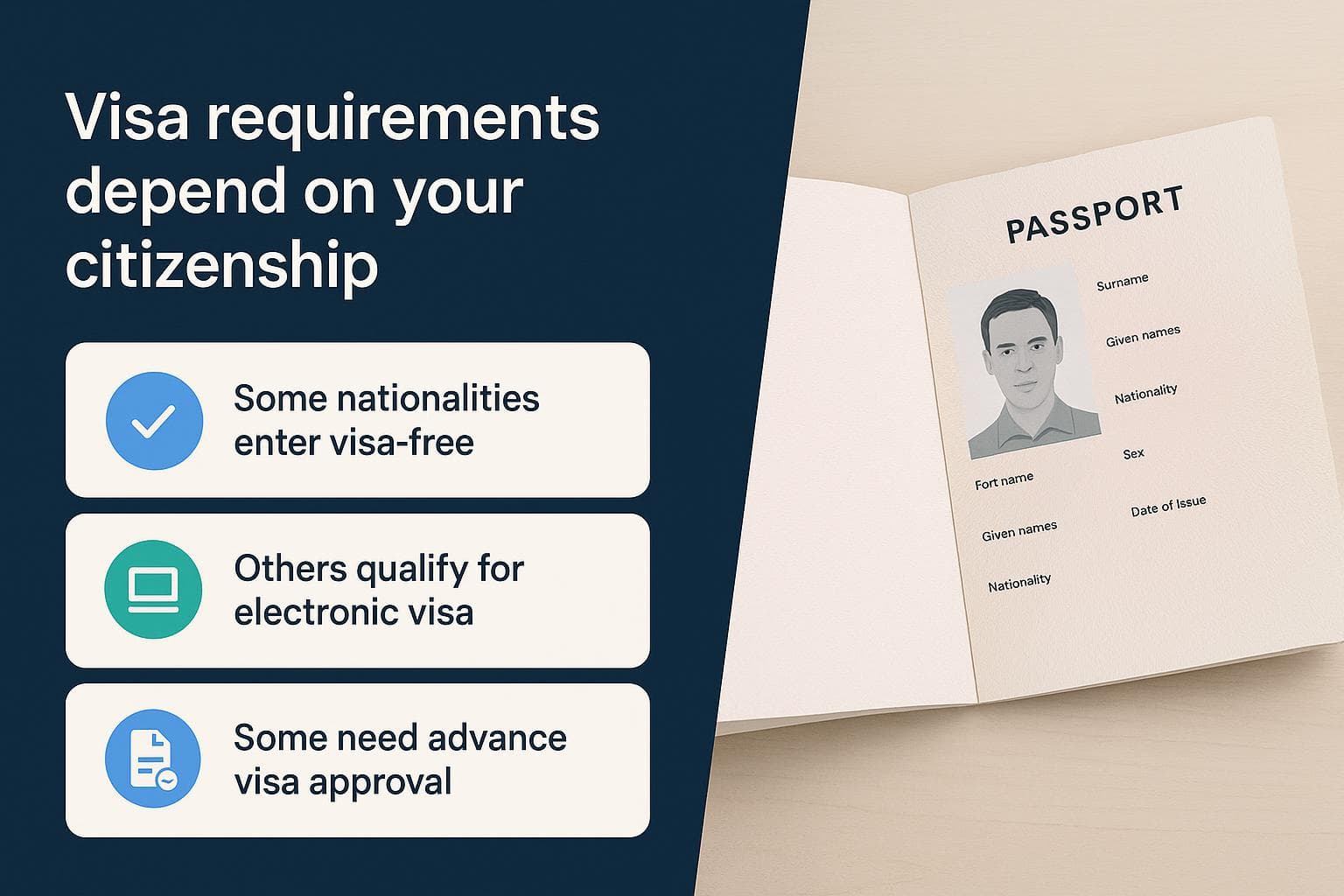
Short answer: it depends on your nationality
There's no one-size-fits-all answer. Citizens of some countries don't need a visa at all, others can simply apply for an electronic visa online, and some will have to go through a Ukrainian consulate. That's why your first step isn't hunting down a generic list — it's matching your specific passport against the current list maintained by Ukraine's Ministry of Foreign Affairs (MFA).
Below is a practical process that gives you an accurate answer for any nationality as of 2026 — no guesswork, no outdated lists.
Step 1. Check your nationality against the official source
The only sources worth trusting are the official MFA portal (mfa.gov.ua) and the electronic visa portal (evisa.mfa.gov.ua). Lists of visa-free countries change from time to time, so any article (this one included) is just a starting point — the decision to admit you rests with the State Border Guard Service on the basis of the current regulations.
To check your status:
- Open the visa policy section on the MFA website.
- Find your country of citizenship in the list.
- Pay attention to the purpose of your trip and the length of stay — visa-free entry often applies only to short visits (typically up to 90 days within a 180-day period), while different rules may apply for work or study.
Step 2. Three possible outcomes
Option A: no visa required (visa-free)
Many countries have a visa-free arrangement with Ukraine for short trips. If yours is one of them, all you need is a valid passport. That said, visa-free doesn't guarantee entry — a border officer may ask for additional documents (see Step 4).
Option B: electronic visa required (e-visa)
Citizens of a number of countries can apply entirely online through the official electronic visa portal. It's quicker and simpler than the consular route: you submit your application, upload documents, and pay the fee remotely, then receive your visa as a PDF by email.
Option C: consular visa required
If your nationality qualifies for neither visa-free entry nor an e-visa, the visa is issued at a Ukrainian diplomatic mission in your country — or in the country where you legally reside. This means applying in person, preparing a set of documents, and usually allowing more time.
Straight to the point: if you do need a visa, that's no reason to abandon the trip — it just means a different sequence of steps. The workflow is laid out below.
Step 3. What to do if you need a visa
Applying for an e-visa (if available for your country)
- Go to Ukraine's official electronic visa portal (evisa.mfa.gov.ua) — don't use intermediary sites that add a markup.
- Choose your visa type (tourist, business, transit, etc.).
- Fill in the application, upload a scan of your passport, a photo, and supporting documents (bookings, an invitation — depending on the purpose).
- Pay the consular fee online. Always verify the current amount on the portal itself, as rates are updated.
- Wait for the decision and print the visa that arrives by email.
Applying for a consular visa
- Find the nearest Ukrainian embassy or consulate on the MFA website.
- Confirm the list of required documents and book an appointment (many missions operate by appointment only).
- Submit your documents in person, pay the fee, and wait for processing.
Since processing times and fee amounts vary by country and visa type, don't rely on figures from third-party sites — the current information is always on the official MFA portal.
Step 4. What else is checked at the border under martial law
In 2026, under martial law, having a visa (or visa-free status) isn't enough on its own. State Border Guard Service officers may also check:
- the purpose and route of your trip — where you're going and why;
- your accommodation — hotel booking, address, invitation;
- your financial means — proof of sufficient funds for the duration of your stay;
- a return ticket or confirmation of onward travel;
- an insurance policy covering medical expenses within Ukraine.
That last item matters especially under martial law. Ordinary travel insurance often carries a "war zone" exclusion and won't be valid in Ukraine. It's therefore worth arranging a specialized policy that accounts for war-related risks. Market prices for such policies typically start at a few euros per day — you can calculate your own option on the war-risk travel insurance quote page.
Keep in mind that even specialized policies have territorial exclusions. Cover typically does not apply in four categories of zones:
- active combat areas, as defined by the relevant state acts;
- temporarily occupied territories;
- a 50-kilometre buffer zone around the first two categories;
- areas under a special-access regime.
This means the policy covers the safe regions that foreign visitors actually travel to, but not high-risk zones. Plan your route accordingly.
Summary: your pre-trip checklist
- Checked your nationality against the official MFA list
- Identified your path: visa-free / e-visa / consular visa
- Applied for a visa through the official portal if needed
- Prepared your border documents (purpose, accommodation, finances, onward travel)
- Arranged an insurance policy covering war-related risks
The precise answer to "do I need a visa" always depends on your passport — but with this process and the official sources in hand, you'll have it within a few minutes.