The short answer: yes, control exists and it's mandatory
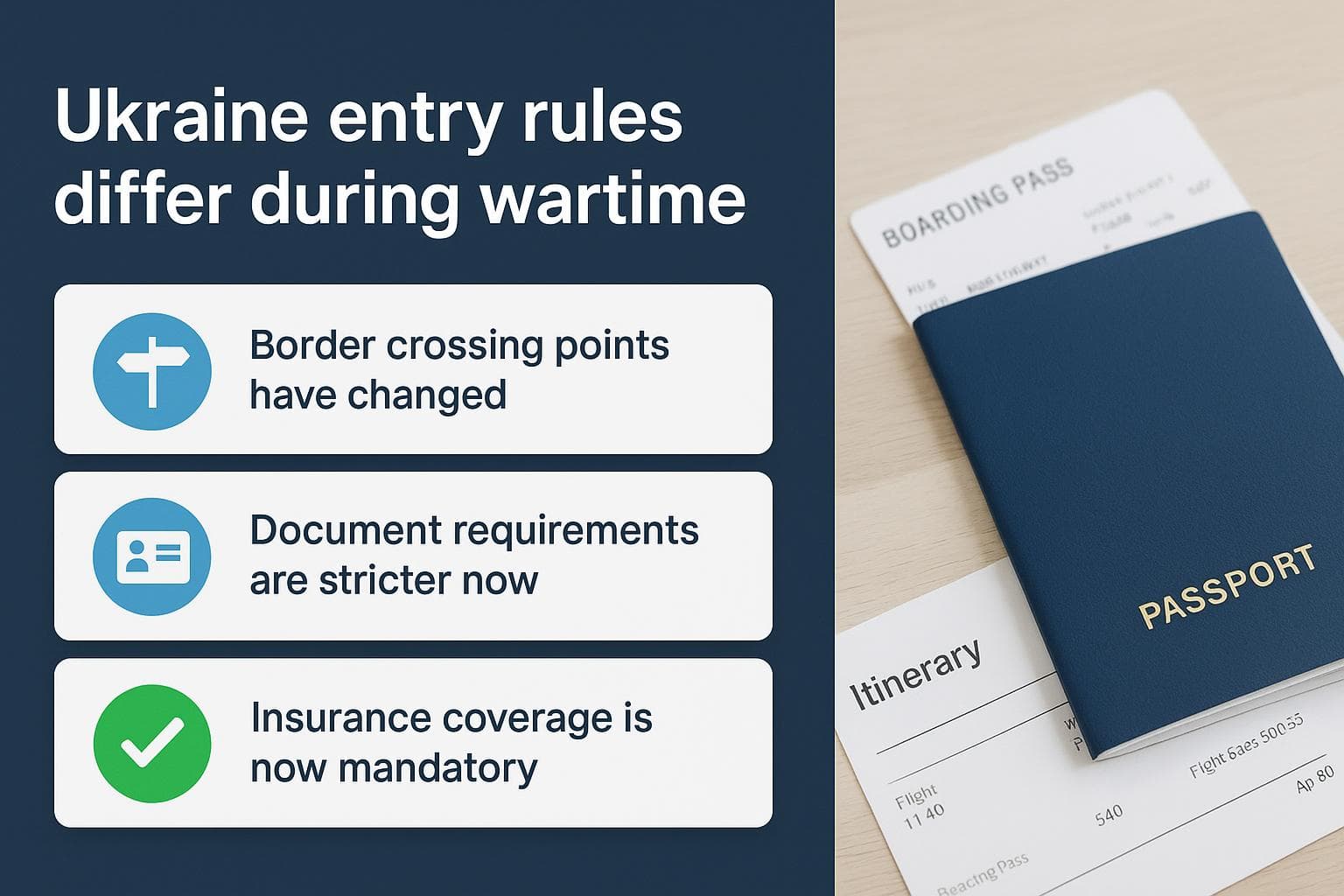
Border control on entry to Ukraine is fully in force in 2026. Because of martial law, the procedures have not been eased — quite the opposite, they've been tightened. Every foreigner crossing the state border is checked at the crossing point, regardless of nationality, mode of transport, or purpose of visit.
Border control is handled by the State Border Guard Service of Ukraine (SBGS). The current list of open crossing points and their operating hours is published on the SBGS official website — dpsu.gov.ua. Since the situation can change, check the official source directly before you travel.
One important point: you can only enter Ukraine from neighboring states that are not the aggressor — Poland, Slovakia, Hungary, Romania, and Moldova. Crossing points in the northern and eastern directions are closed.
What border guards actually check: four main areas
Getting through control involves several consecutive stages. Here's what to have ready in advance.
1. Your entry document
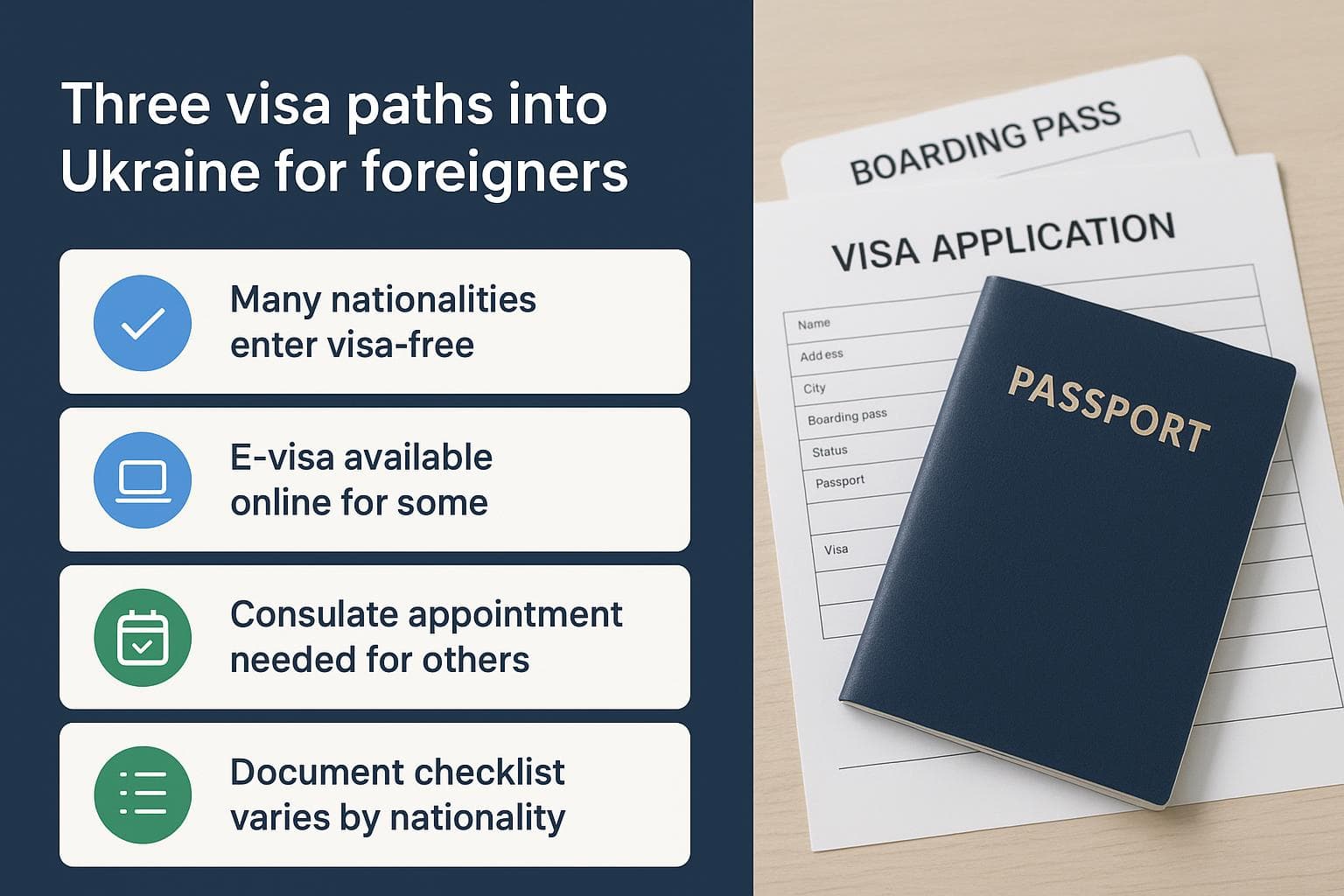
The essential item is a valid international passport. The border guard checks the document's validity period, whether you have a visa (if your country requires one to enter Ukraine), and that the photo matches. Citizens of many countries — including the EU, the US, Canada, and the UK — enter visa-free for up to 90 days within a 180-day period. For the full list of visa-free countries and requirements, see the website of the Ministry of Foreign Affairs of Ukraine — mfa.gov.ua.
2. Purpose of travel
The border guard may ask about the purpose and length of your stay, where you'll be staying in Ukraine, and whether you have sufficient funds. This is standard practice. Answer briefly and honestly: tourism, work, visiting family, volunteering, and so on. It helps to carry supporting documents — accommodation bookings, an invitation, or a return ticket.
3. Insurance
Medical insurance for foreigners is advisable, and for certain categories it's mandatory. But there's a separate point worth stressing: during martial law, ordinary travel policies generally do not cover risks related to combat operations. That's why it makes sense to arrange insurance that accounts for war-related risks before you cross the border.
Such policies start from a few euros per day on the market and can be arranged online in a matter of minutes. You can calculate the cost and buy a policy here. Pay attention to the territorial exclusions — as a rule, coverage does not apply in four categories of zones:
- combat zones as defined by acts of state authorities;
- temporarily occupied territories;
- a 50-kilometer buffer strip around both of the above zones;
- areas under a special-access regime.
This means the policy protects you in the country's safer regions, but does not cover travel into the zones listed above.
4. Customs control and registration
Customs control runs alongside border control: declaring cash above the set limit, goods, and vehicles. The current import rules are on the website of the State Customs Service (customs.gov.ua). If you plan to stay longer than the permitted period, you should find out in advance the rules for extension and registration through the local offices of the State Migration Service.
How control differs at different types of crossing points
The procedure is essentially the same, but the setup and waiting times depend on the type of crossing.
Road crossing points
The most common option. You go through control right in your vehicle: you present the passports of all passengers and the vehicle documents (registration certificate, Green Card — international motor insurance). The vehicle is inspected. Waiting times here are the least predictable — on peak days, queues in popular directions (for example, the Polish border) can last many hours. Check the approximate load on the SBGS website, where queue data is published.
Pedestrian crossing points
On some routes (mainly with Poland) there are pedestrian crossings. You walk through with hand luggage, which is often quicker than the vehicle queue. The set of documents is the same — passport and, if required, a visa. This is a convenient option if you arrive at the border by public transport and continue separately from there.
Rail crossing points
International trains (for example, from Przemyśl, Košice, or Chełm) are a comfortable way to travel. Border and customs control take place right in the carriage: officers walk through the train, check passports, and stamp documents. You don't need to leave the train. This is a time-predictable option, since control happens while the train is moving or stopped at the border station.
Practical tips before you travel
- Check your passport's validity — it must remain valid for your entire stay.
- Clarify the visa requirements for your country in advance on the MFA website.
- Arrange insurance that accounts for war-related risks online while you're still at home.
- Keep documents supporting the purpose of your trip within easy reach.
- Before setting off, check whether your chosen crossing point is open and review its load on the SBGS website.
- If you're driving, don't forget your Green Card and vehicle documents.
Summary
Border control on entry to Ukraine in 2026 is a reality you can't avoid. But for a law-abiding traveler with the right set of documents, the procedure is clear and predictable. The key points: enter only through open crossing points from friendly states, have a valid passport, a visa if required, and up-to-date insurance that takes martial law into account. Always check the official sources — the SBGS, the MFA, and Customs — right before you travel.