The short answer: ordinary medical insurance usually doesn't cover war
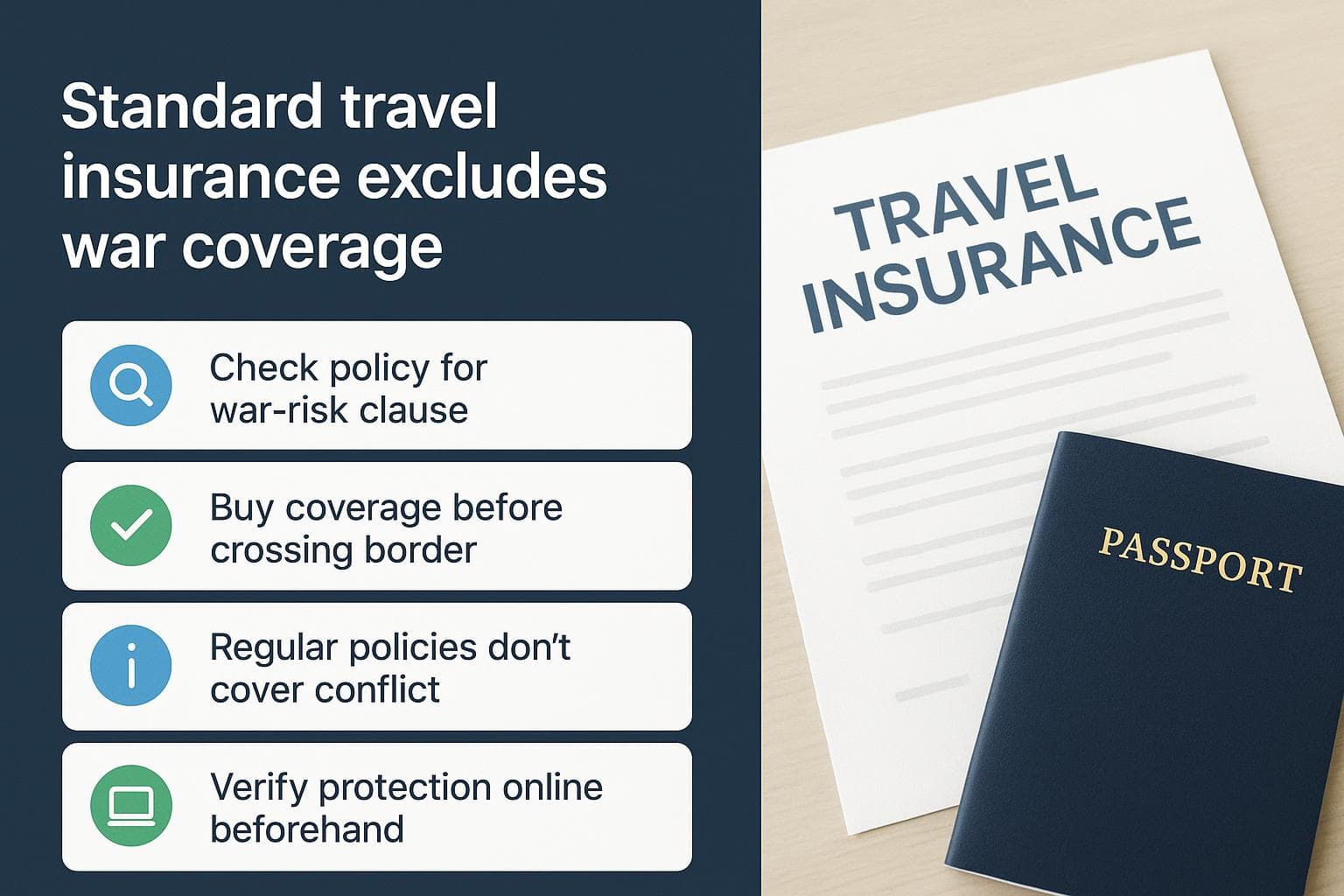
If you're searching for "travel medical insurance for Ukraine" and hoping that any tourist policy will automatically protect you in a country where an armed conflict is under way — that's not how it works. The vast majority of standard travel medical policies contain an explicit exclusion for the consequences of hostilities, shelling, the use of weapons, and armed unrest. In other words, the very risk that sets Ukraine apart from an ordinary tourist destination is precisely what these contracts usually leave out.
This isn't a trick by the insurers — it's standard practice worldwide. War risks have always been carved out of basic cover and insured separately. So the right question isn't "do I have medical insurance?" but "does my contract include war-risk cover?"
Two different things: medical cover and war risks
To avoid confusion, let's draw a clear line between the two.
Travel medical cover pays for treatment following a sudden illness or an everyday injury — a cold, appendicitis, a fracture from a fall on the stairs, food poisoning. It works under normal circumstances and, on its own, has nothing to do with war.
War-risk cover is a separate component that deals with harm to your health caused by hostilities: the aftermath of shelling, missile and drone strikes, explosions. Without this component, any medical expenses directly linked to the war fall outside your contract.
For a trip to Ukraine in 2026, it's the combination of both components that matters. Medical cover handles the "ordinary" situations; war-risk covers what makes the country unique under current conditions. One without the other leaves you only partly protected.
How to check for war cover before you buy
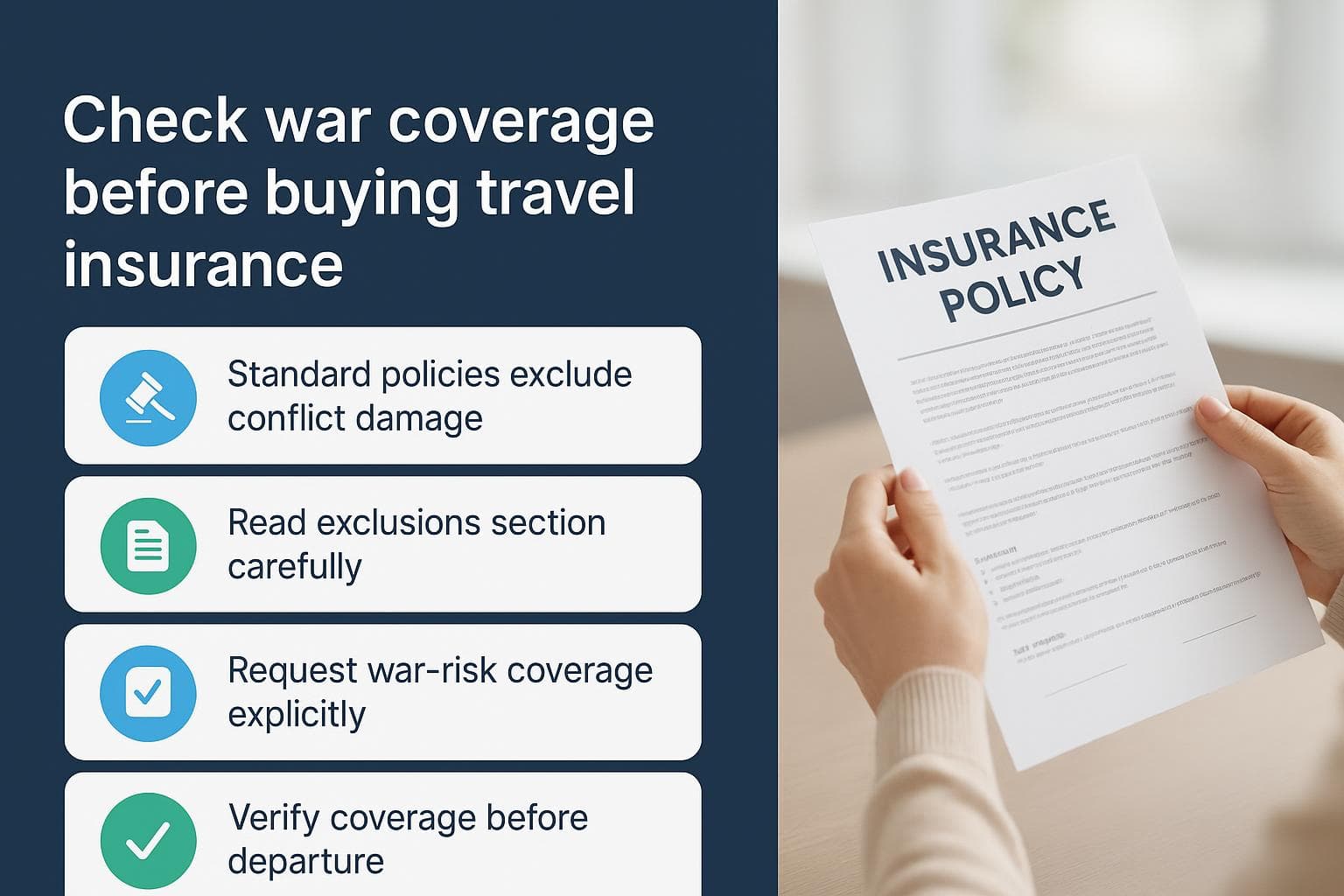
Don't buy a policy blind. Before you pay, open the terms of the contract and check a few points.
- The "Exclusions" section. Look for wording about war, hostilities, armed conflict, and terrorism. If it states a blanket exclusion with no exceptions, the policy does not cover war risks.
- A separate war-risk extension. Look for a distinct block or option that explicitly restores cover for the consequences of hostilities. That is what makes a policy suitable for Ukraine.
- Territorial provisions. A properly written contract does not exclude entire oblasts. Exclusions should be described as four categories of zones, not as "all of Donetsk or Kharkiv oblast."
- Sum insured and assistance. Check the medical expense limit and whether there's round-the-clock support to coordinate help on the ground.
If any of these points is unclear, that's a reason to ask questions before you buy — not after a claim arises.
Which areas are excluded: four categories of zones
A transparent war-risk policy doesn't cross out whole regions. Instead, the exclusions are described as four clearly defined categories:
- combat zones, as designated by the relevant acts of state authorities;
- temporarily occupied territories;
- a 50-kilometre buffer strip around both of the above;
- areas under a special-access regime.
This approach is fairer to the traveller: protection applies across the rest of the country rather than being cancelled for an entire oblast because of a single settlement near the line of contact. Before you travel, cross-check your route against these categories.
Who stands behind the policy — and why it matters
War-risk insurance only makes sense when a regulated insurer capable of meeting its obligations stands behind it. In our case, the service is provided by an insurer supervised by the National Bank of Ukraine (licence class 18), which is part of an EU-listed group subject to Solvency II solvency requirements.
The agent that arranges the contract is registered in the USREOU under code 44559356; in line with insurance distribution requirements (IDD), the agent's role and status are disclosed. This isn't a formality — it's precisely this structure that gives you confidence that a payout won't hinge on surprises.
How to arrange a policy online before crossing the border
The whole process is done remotely and takes only a few minutes. The logic is simple.
- Enter your trip details. Entry and exit dates, country of citizenship, number of people.
- Choose cover that includes war-risk. Make sure war risks are switched on, not just basic medical cover.
- Review the amount and terms. You'll see the current price on the quote page — the market range is a few euros per day, and the exact figure depends on the duration and parameters.
- Pay and receive your policy. The document arrives by email; save it on your phone and print a copy.
You can generate a quote and see your own price on the policy checkout page. Do this before crossing the border, so your protection is in force from day one of the trip.
Check entry rules only in official sources
Insurance doesn't replace visa and border requirements, and vice versa. Entry conditions can change, so verify information about visas, documents, and crossing procedures solely against official resources:
- the Ministry of Foreign Affairs of Ukraine and its consular pages — for visas and documents;
- the State Border Guard Service of Ukraine — for the operation of checkpoints;
- your own foreign ministry — for current advice to its citizens.
Don't rely on forums or outdated articles: base your decisions on up-to-date official information, and align your insurance cover with it.