The short answer: by air, no — overland, yes
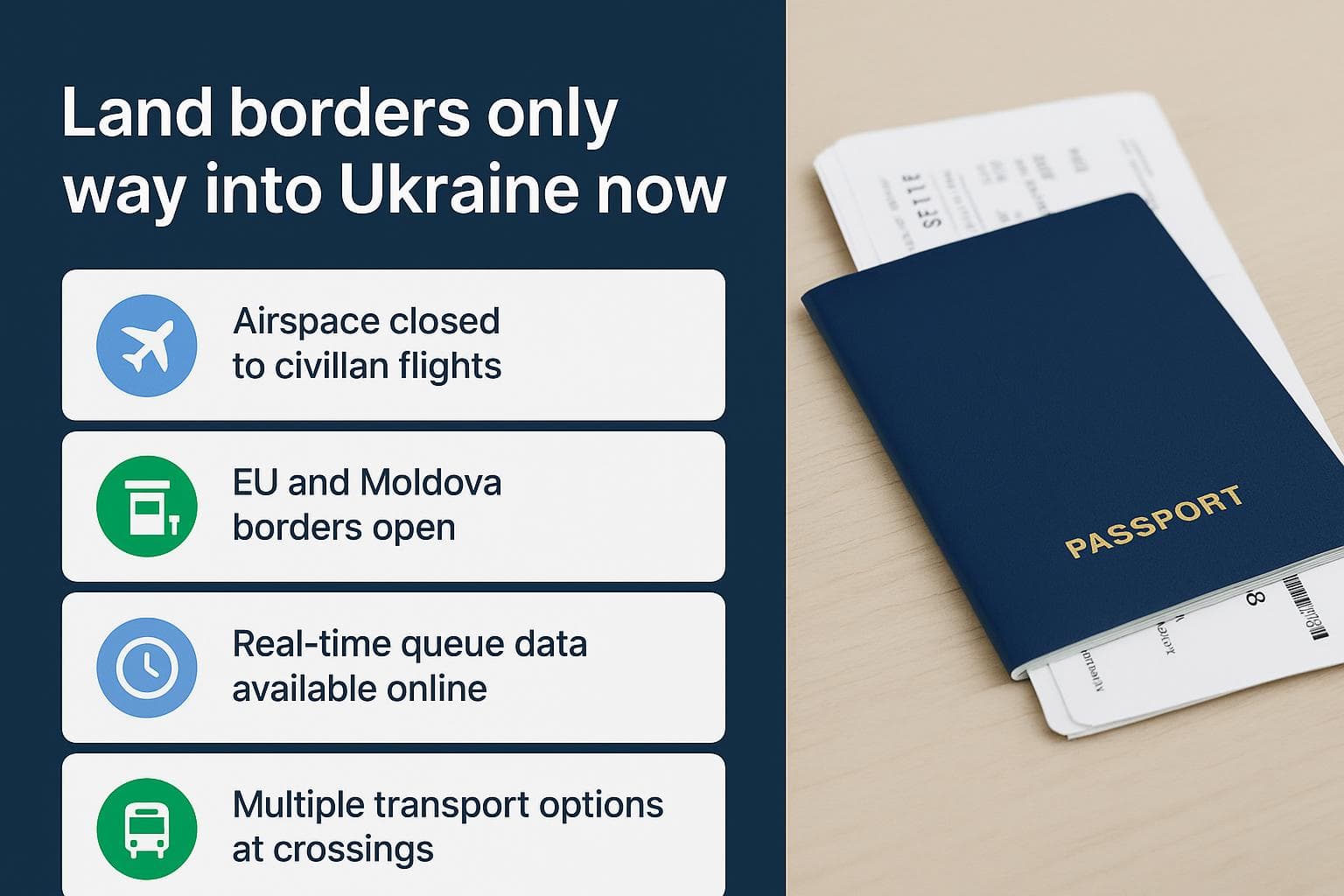
Reaching Ukraine by direct flight in 2026 is not possible. The country's airspace has been closed to civilian aviation since the start of the full-scale invasion in February 2022, and that restriction is still in force as of 2026. None of the major airports — Boryspil, Lviv, Odesa — are handling passenger flights.
This isn't a dead end, though — just a different way of travelling. Practically every foreign visitor today reaches Ukraine overland: they first fly into an airport in a neighbouring country, then continue by bus, train, car or transfer to one of the land border crossings. Let's walk through these routes step by step.
Which country to enter through: five options
Ukraine borders four EU countries and Moldova, all of which allow entry:
- Poland — the most popular option, with the most crossings and the best transport links.
- Slovakia — handy for anyone heading to western Ukraine via Uzhhorod.
- Hungary — a short route into the Zakarpattia region.
- Romania — ideal for the south and centre, as well as for Chernivtsi.
- Moldova — a convenient choice for routes towards Odesa.
The most useful arrival airports in the region are Warsaw, Rzeszów and Kraków (Poland); Košice (Slovakia); Budapest (Hungary); Bucharest and Suceava (Romania); and Chișinău (Moldova).
A step-by-step route (using Poland as an example)
- Book a flight to Rzeszów or Warsaw. Rzeszów is the closest to the Ukrainian border.
- Get to the border. From Rzeszów there are direct buses and minibuses to Lviv and other cities. From Warsaw, international buses run alongside the Przemyśl–Kyiv train.
- Clear Polish exit control, then Ukrainian entry control. At pedestrian and vehicle crossings these are two separate procedures.
- Continue deeper into the country by Ukrzaliznytsia train or by bus. The rail network runs reliably and is the most dependable way to move around within the country.
Routes through the other countries follow the same pattern: fly into the nearest airport → overland transfer to the border → crossing → onward domestic connection.
What documents you need
- A passport valid for the whole duration of your trip.
- A visa, or visa-free entry — depending on your nationality. Citizens of the EU, the UK, the US, Canada and a number of other countries enjoy visa-free entry; check the list and permitted stay on the official website of Ukraine's Ministry of Foreign Affairs (mfa.gov.ua).
- Travel insurance with war-risk cover — a critically important document. Standard travel policies usually exclude armed conflict, which means they won't pay out under martial law.
- If you're entering by car, you'll also need the vehicle registration documents and a Green Card.
Male Ukrainian citizens are subject to separate exit and entry rules under mobilisation legislation — this doesn't apply to foreigners, but keep it in mind if you're travelling together.
Insurance: why it's not a formality
Medical care abroad is expensive, and in a country under active martial law the risks run higher. Standard policies almost always carry a "war and hostilities" exclusion, so travel to Ukraine calls for dedicated cover. On the market such a policy costs from a few euros per day, and the exact price depends on the length and scope of cover — you can calculate the cost on the quote page.
Pay attention to the territorial exclusions that any honest policy will contain. Cover typically does not apply in four categories of zones:
- combat zones designated by state acts;
- temporarily occupied territories;
- a 50-kilometre buffer strip around the first two categories;
- areas under a special-access regime.
Important: the exclusions are defined by these specific zones, not by entire oblasts. Most of Ukraine's territory — including the western and central regions that foreign visitors typically head for — remains covered.
Border crossings and estimated wait times
| Crossing | Neighbouring country | Type | Estimated wait |
|---|---|---|---|
| Krakovets | Poland | vehicle | from 1 to several hours |
| Shehyni | Poland | vehicle/pedestrian | often busy |
| Medyka – Shehyni | Poland | pedestrian | moderate |
| Uzhhorod | Slovakia | vehicle/pedestrian | usually moderate |
| Malyi Bereznyi | Slovakia | vehicle | light |
| Tysa (Chop) | Hungary | vehicle/rail | moderate |
| Porubne | Romania | vehicle | moderate |
| Siret – Porubne | Romania | vehicle | moderate |
| Palanca | Moldova | vehicle | usually light |
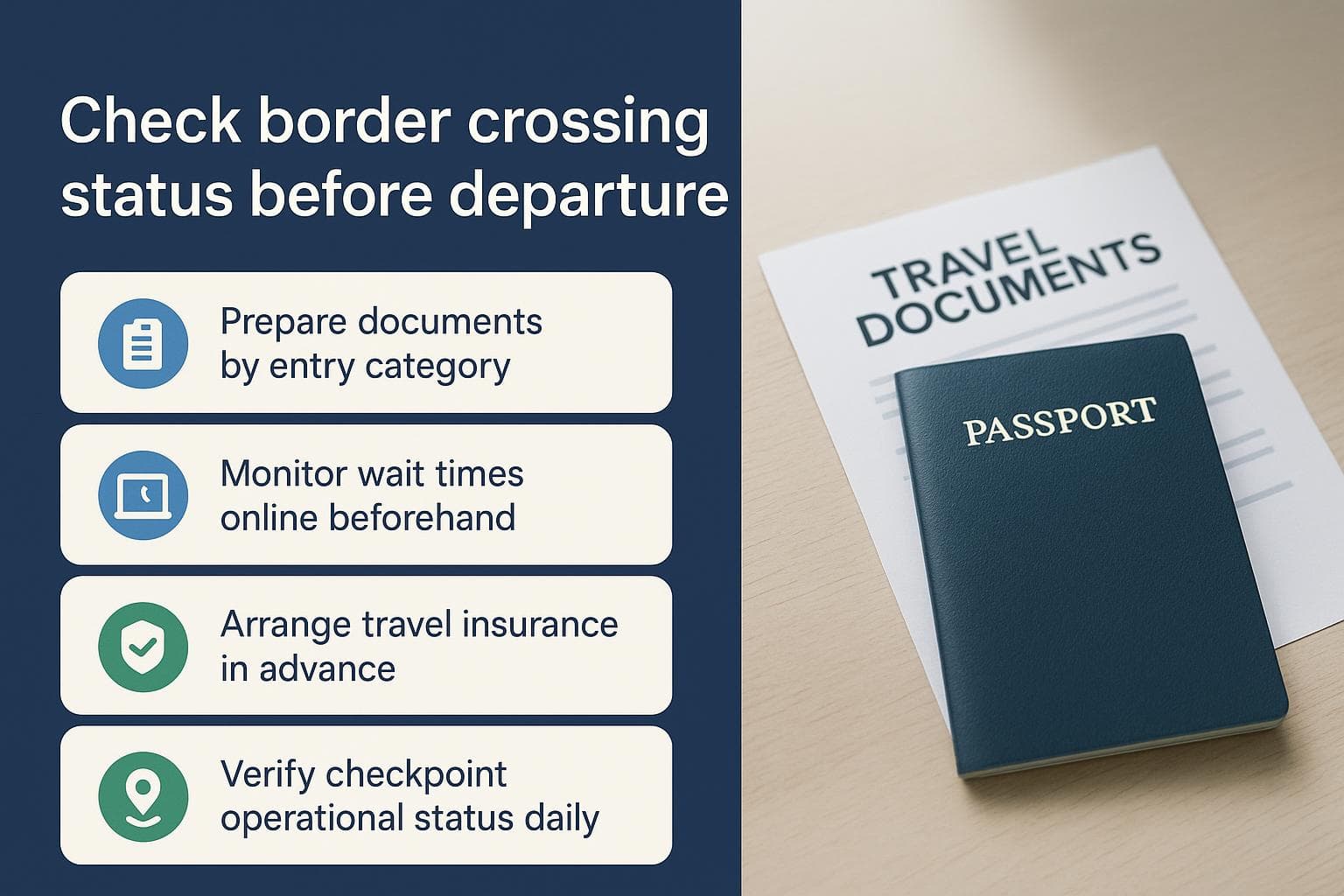
Wait times vary with the day of the week, the time of day and the security situation. Check the current load at crossings on the official channels of the State Border Guard Service of Ukraine (dpsu.gov.ua) and in its official apps and channels.
Tips for a smoother crossing
- Plan your crossing for a weekday morning — traffic is usually lighter than at weekends.
- Keep all your documents (passport, insurance policy, bookings) together in one easy-to-reach place.
- Check the security situation and transport schedules before you set off.
- Rail is the most predictable way to travel inside the country; buy tickets in advance on the official Ukrzaliznytsia website.
Always cross-check any news about closures or changed opening hours at individual crossings against the primary sources — the State Border Guard Service and Ukraine's Ministry of Foreign Affairs — as the rules can change.