Short answer: do you actually need a visa
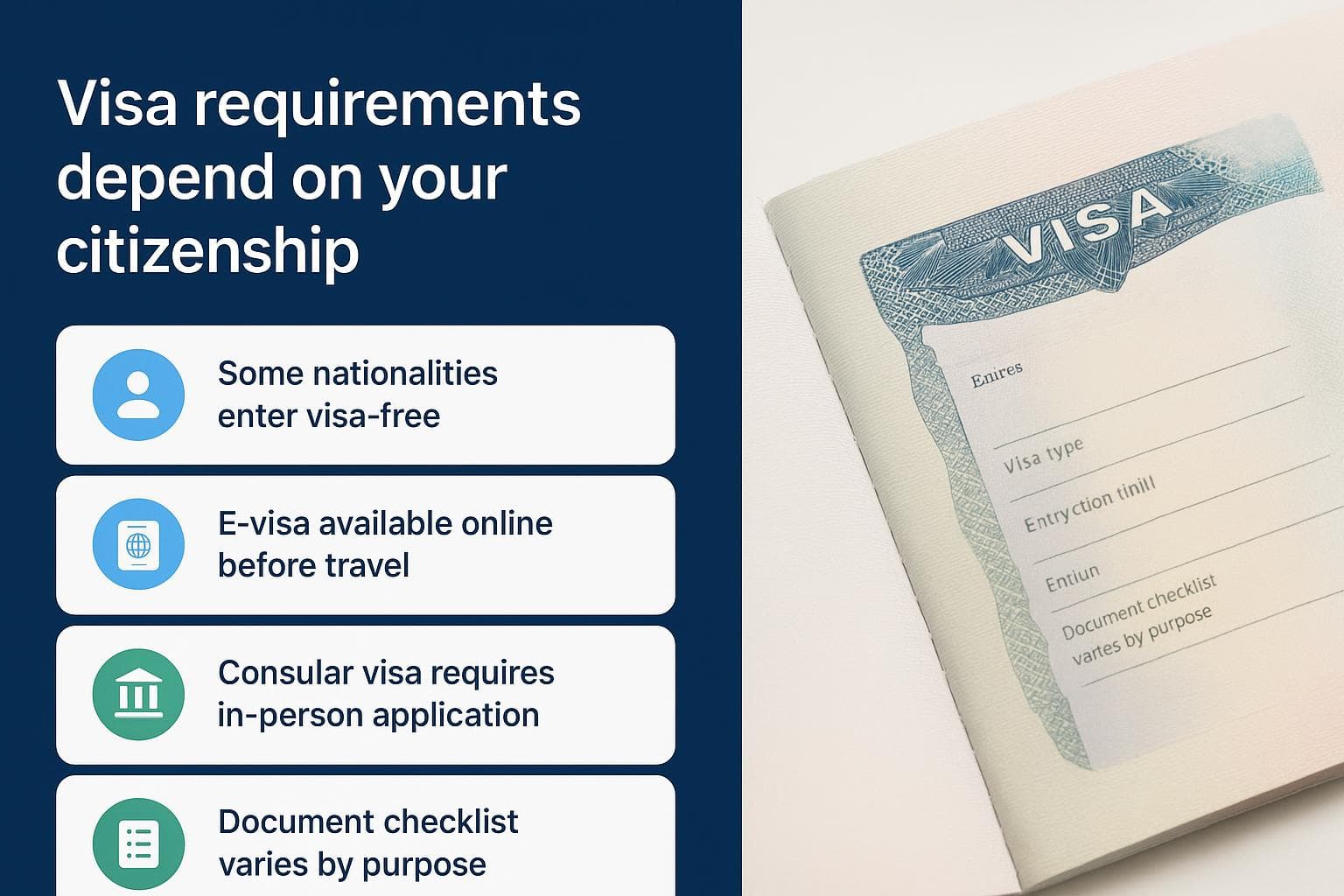
Whether you need a visa to Ukraine comes down to just two things — your citizenship and the purpose and length of your trip. There's no single yes-or-no answer that fits everyone, so start by figuring out which of the three categories applies to you:
- Visa-free entry. Citizens of a number of countries (including EU member states, the United Kingdom, the United States, Canada, Japan, and others) may enter without a visa for up to 90 days within any 180-day period. This is the most common and simplest scenario.
- Electronic visa (e-visa). For nationals of a specific list of countries that don't have visa-free access but qualify for a streamlined online application.
- Consular visa. For everyone else, as well as for certain trip purposes (long-term study, employment, family reunification) that require a type D visa.
One important note: in 2026 Ukraine remains under martial law, so specific entry rules, border checkpoint operations, and country lists may be adjusted. Always confirm the current situation on the official portal of the Ministry of Foreign Affairs of Ukraine.
Visa-free entry: who qualifies and for how long
If your country has a visa-free arrangement with Ukraine, no visa is needed at all for a short-term trip (tourism, a guest visit, a business meeting, transit). The standard stay limit is up to 90 days within any 180-day period.
Keep in mind: visa-free status allows you to enter, but it does not grant the right to work or study on a long-term basis. For those purposes a type D visa is required even for citizens of visa-free countries.
You can check whether your country is on the visa-free list on the MFA website, in the section on consular matters — the current list of countries and conditions is published there.
Electronic visa: eligible countries and how to apply
The electronic visa is a streamlined option for nationals of specific countries who can apply online without visiting a consulate. It is issued only through the official portal: evisa.mfa.gov.ua.
E-visa types:
- Tourist (short-term) — for tourism and private visits.
- Business — for negotiations, conferences, and business trips.
- Other grounds (medical treatment, participation in events, etc.) — check the full list on the portal.
Step-by-step e-visa application
- Go to the official portal at evisa.mfa.gov.ua. Don't use third-party intermediary sites — they add a markup and don't guarantee a result.
- Select the visa type and purpose of travel (tourism, business, etc.).
- Complete the application in Latin letters, matching the details in your passport.
- Upload the documents: a scan of your passport (valid at least for the duration of your trip), a colour photo, proof of the purpose of your visit, and medical insurance covering your stay.
- Pay the consular fee online. Don't rely on figures from other articles — the fee is set officially and can change, so verify the amount directly on the MFA portal before paying.
- Wait for a decision. The estimated processing time is listed on the portal; apply well in advance, not a few days before departure.
- Print your approved e-visa — you'll need to present a paper or electronic copy at the border along with your passport.
The e-visa is generally single-entry or short-term and isn't suitable for long-term study or work — for those, you'll need a consular type D visa.
Consular visa: when you can't skip the consulate
If your country is on neither the visa-free list nor the e-visa list, that's not a dead end — there's a workable route, it just runs through a Ukrainian diplomatic mission.
A consular visa is also mandatory for long-term purposes, regardless of citizenship:
- Type D visa (long-term) — study at a Ukrainian higher education institution, employment, family reunification, religious activity, or volunteering under the relevant programmes.
- Type C visa (short-term) — for nationals without visa-free access or an e-visa who need to enter for tourism or business.
What to do if you can't get an e-visa
- Find a Ukrainian embassy or consulate in your country or in the nearest state of accreditation — the list is on the MFA website.
- Confirm the visa category for your purpose (C or D) and the full document list directly with the mission.
- Prepare your documents: a valid passport, the application, a photo, proof of purpose (an invitation from an educational institution, employer, or host), proof of funds, and medical insurance.
- Book an appointment, submit your documents, and pay the consular fee — check current rates only on the official source, not in blogs.
- Wait for a decision. For a type D visa, you'll often need to obtain a temporary residence permit after entering Ukraine — arrange this step in advance.
Estimated stay periods (2026)
| Grounds for entry | Document type | Estimated stay |
|---|---|---|
| Tourism, visit, transit (visa-free country) | No visa | Up to 90 days / 180 days |
| Tourism, business (e-visa) | E-visa | Per the conditions on the evisa portal |
| Short visit (non-visa-free country) | Type C visa | Usually up to 90 days |
| Study, work, family | Type D visa + residence permit | Long-term, with a residence permit to follow |
These periods are indicative: the actual permitted stay is recorded by the border officer in your entry stamp. Don't exceed it — overstaying carries fines and a ban on future entry.
Border document checklist
Whether you're entering visa-free, on an e-visa, or on a consular visa, bring the following to the checkpoint:
- A passport valid for the entire duration of your trip.
- Your visa or approved e-visa (a printout), if one is required.
- Proof of the purpose of your trip — accommodation bookings, an invitation, documents from an educational institution or employer.
- Proof of a return ticket or itinerary.
- Sufficient funds for your stay.
- A valid medical insurance policy covering your entire stay in Ukraine.
Why insurance isn't a formality — it's an entry condition
Border officers and consulates may require a medical insurance policy as a mandatory document. But under martial law, an ordinary travel policy often doesn't cover risks related to combat operations. So for a trip to Ukraine in 2026, it's worth arranging insurance that specifically accounts for war-related risks.
Pay attention to the territorial exclusions: a proper war-risk policy excludes coverage not by whole oblasts, but only for four specific zone categories:
- combat zones — as defined by official acts of the state authorities;
- temporarily occupied territories;
- a 50-kilometre buffer strip around the first two categories;
- areas under a special-access regime.
The rest of the country stays covered. This approach gives realistic protection without artificially "crossing out" entire regions. On the market, coverage like this typically starts from a few euros a day — you can calculate the exact amount for your dates and route and buy a policy on the insurance quote page.
Where to double-check before your trip
Entry rules under martial law can change quickly. Before booking tickets, always check the latest information at:
- the official MFA portal of Ukraine (visa-free and e-visa country lists, consular fees);
- the evisa.mfa.gov.ua portal (e-visa applications and status);
- the State Border Guard Service of Ukraine website (checkpoint operating hours).
Don't rely on fees and processing times from unofficial sites — they go out of date.